
At our group’s most recent reenactment (https://www.thegreekphalanx.org) at Fort Loudoun, PA (USA) we organized our own ancient Greek games. Since sport existed in such an important intersection of religion, war, and art within ancient Greek culture, we felt it would be a fun immersion activity. We held competitions in archery, javelin, discus, slinging, running in panoply (hoplidromos), and jumping. We also included a demonstration of pankration, which was limited to those trained in that sport (for safety reasons). While slinging may not have been an official event at any of the ancient games, it had such a universal presence within the Greek world (among shepherds, in warfare, etc.) that we felt it warranted inclusion as an ancient skill. The other events were commonly held in almost every ancient games, and many are described in the Iliad.
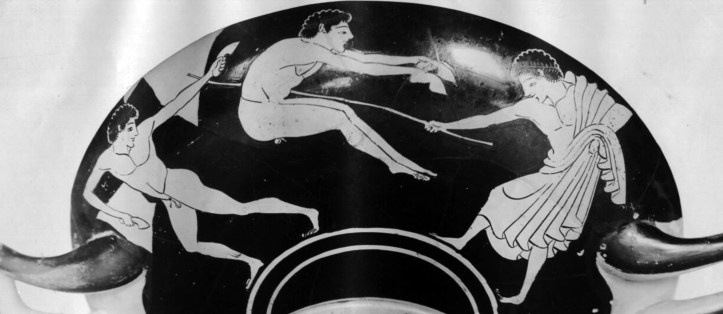
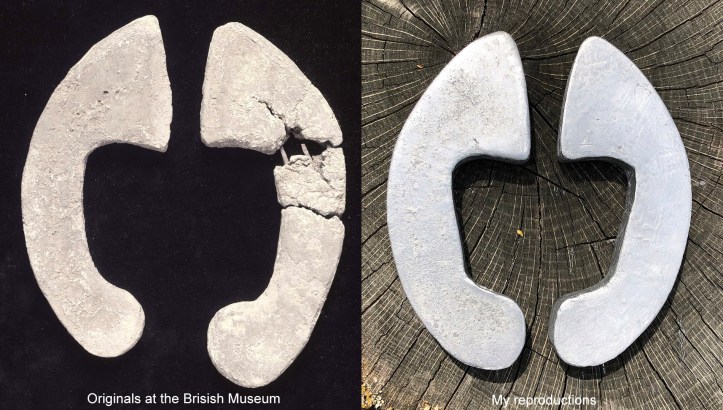
Weights (halteres) were commonly used in jumping events, and in athletic training. Halteres were made from stone, lead, and bronze. They came in a variety of shapes and sizes: some were clearly intended for youths, others were very large, with weights ranging from 1kg to 9kg. For our jumping competition I created a set of halteres modeled after a 5th century BCE set made from lead, located in the British Museum. Attached are images showing my final product, the originals upon which they’re based, and some process photos.
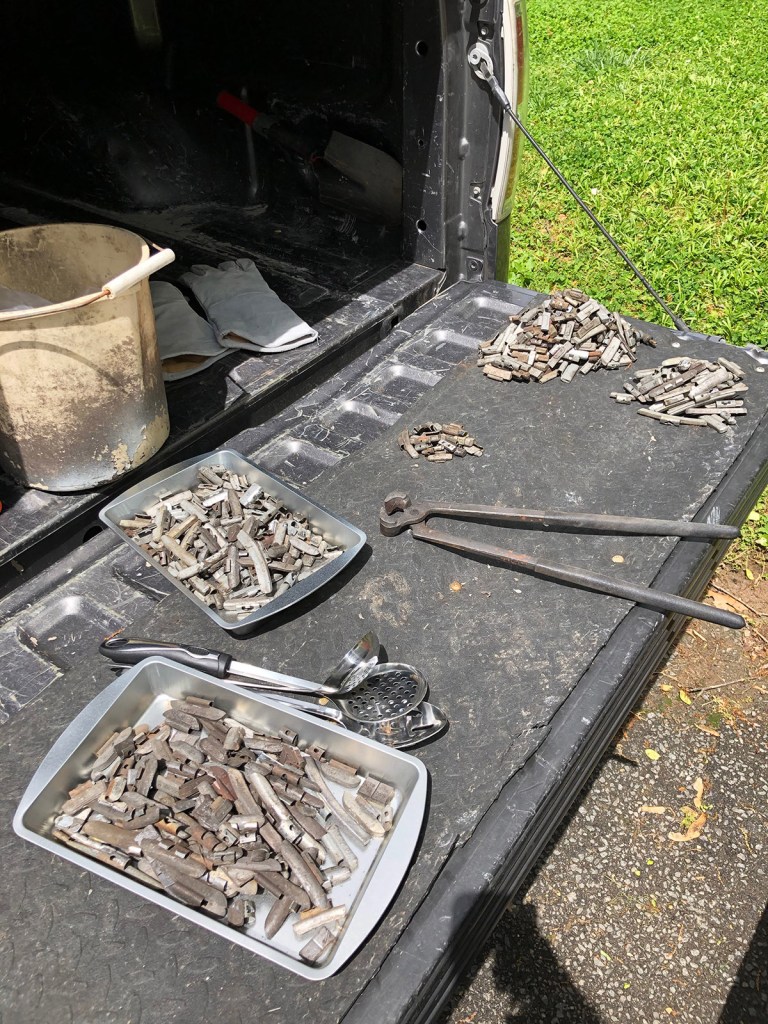
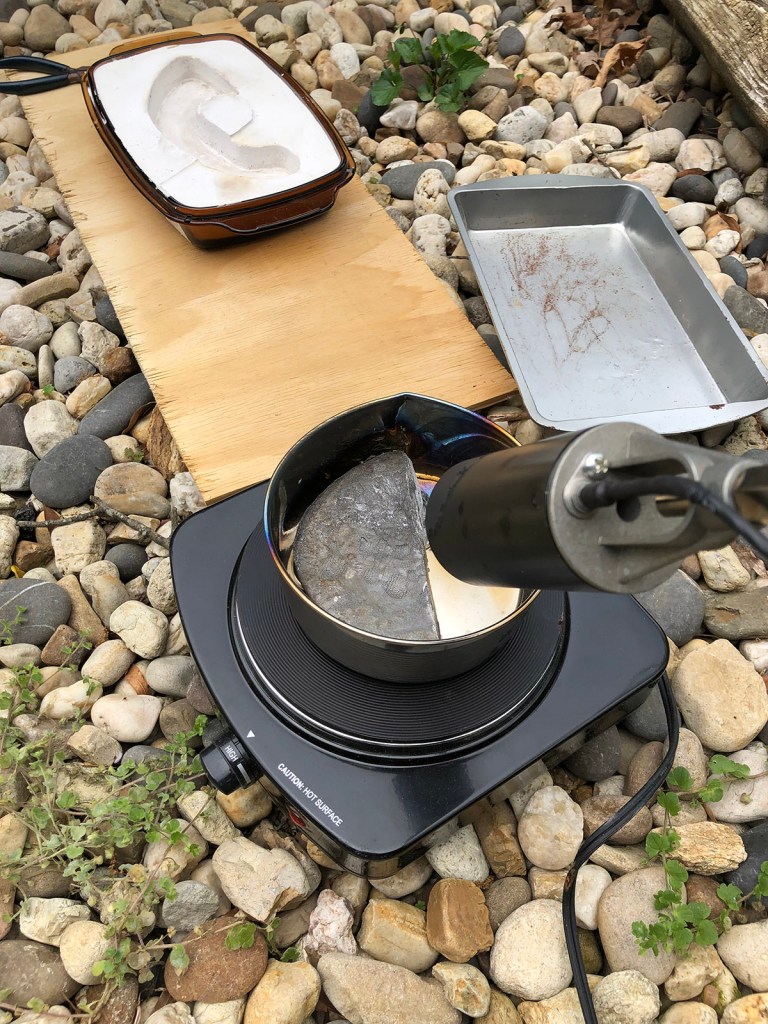
The lead is from automotive wheel-balancing weights I acquired for free from tire service centers. I did my best to sort the weights by their metal type, melted them down using a discarded steel bowl, electric hotplate, and a propane torch. I then skimmed off any debris/steel clips that floated to the top of the molten lead.
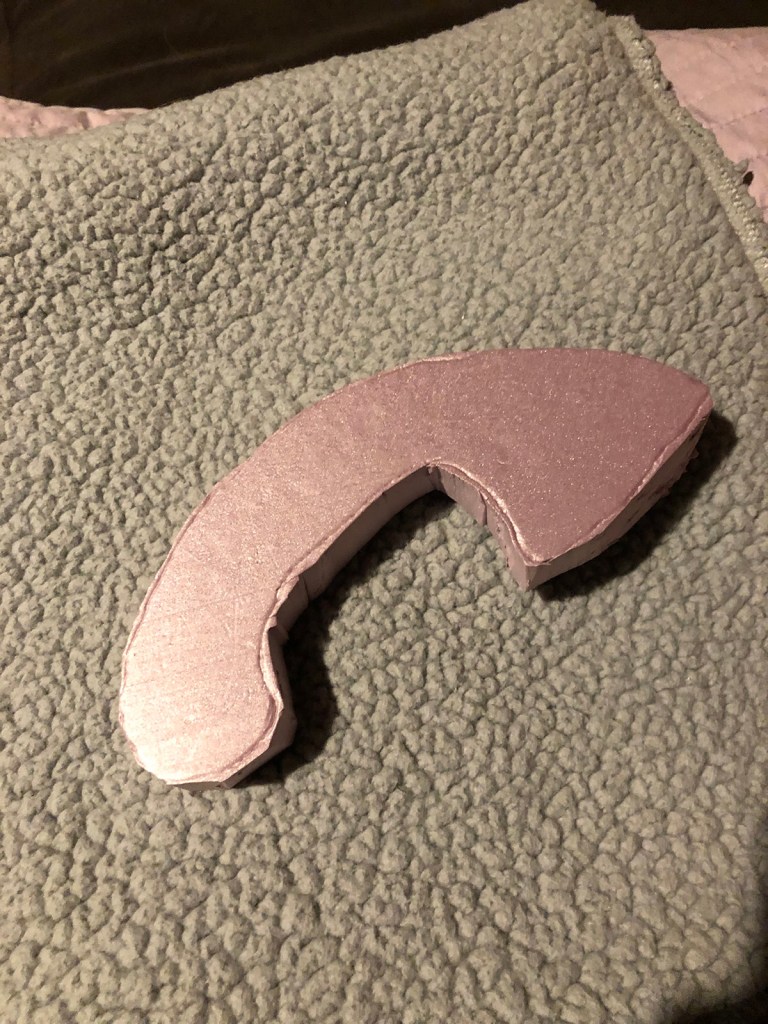
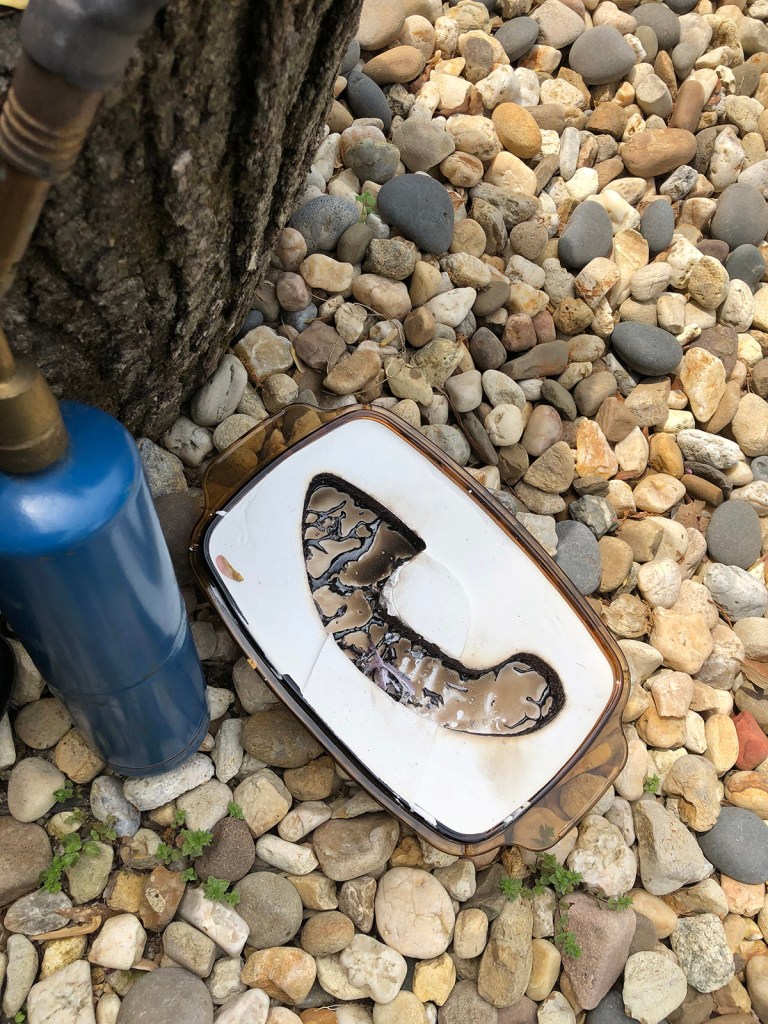
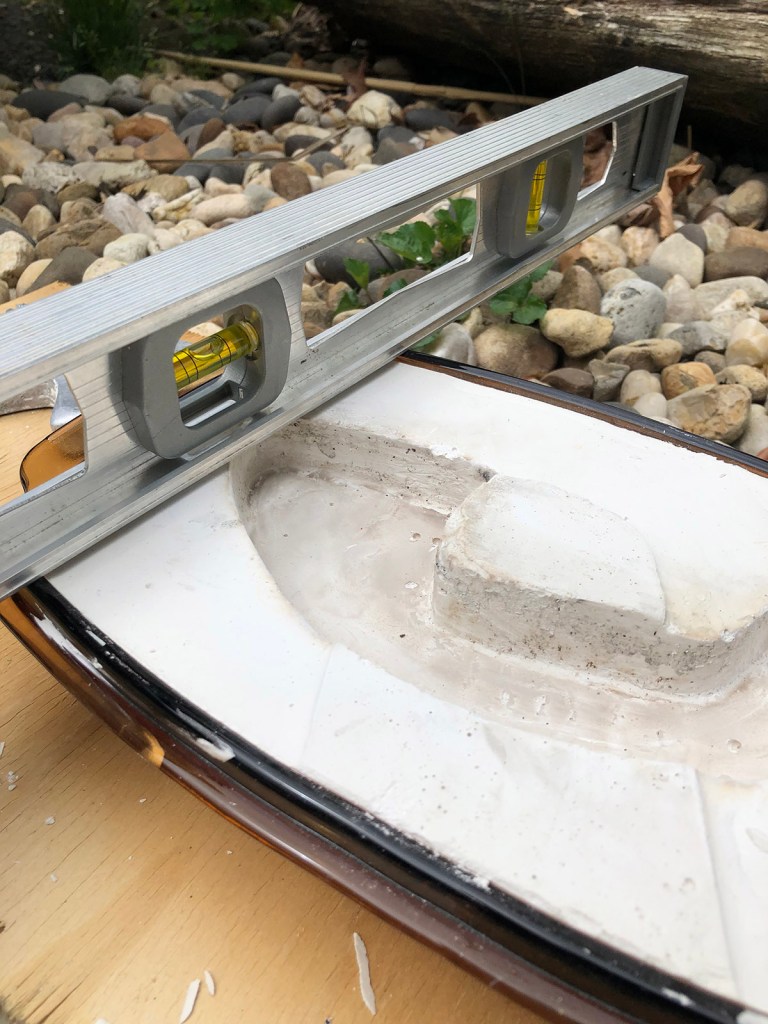
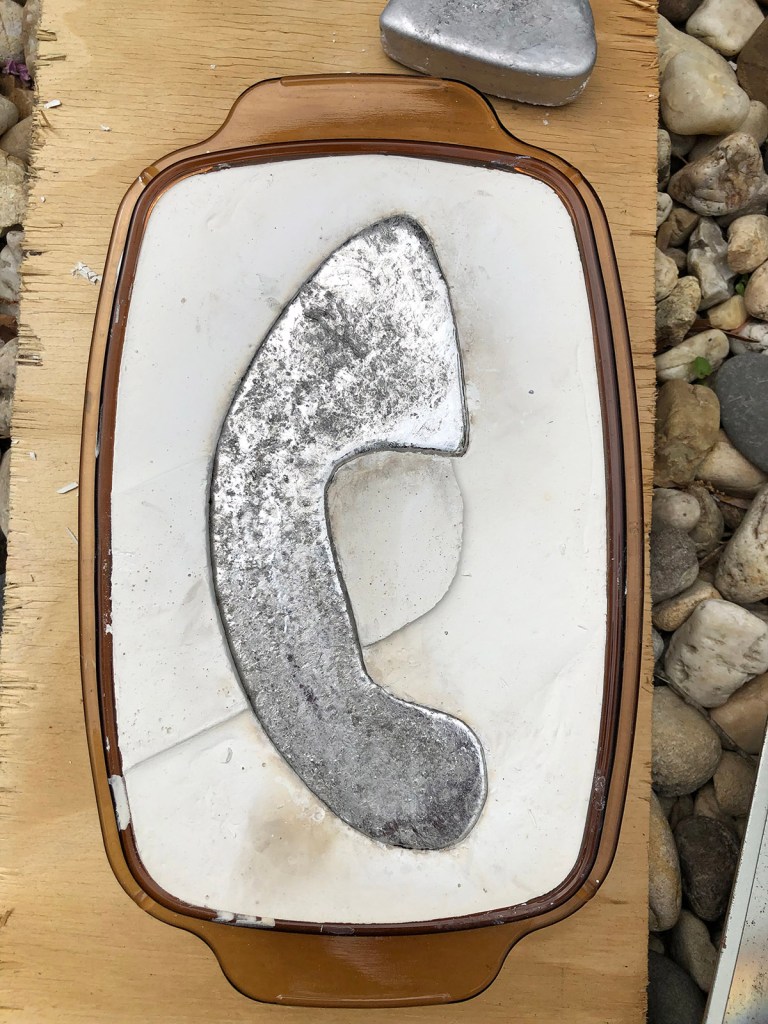
I traced a photo of the British Museum jumping weight onto a piece of styrofoam, and cut out the rough shape. I used styrofoam since it’s easy to shape, inexpensive, and would be easy to de-mold using heat. I then did a small amount of sanding on the foam to round the edges to better match the originals, and to make sure that it would leave a good impression in the mold. I used an old Pyrex casserole dish from a thrift store to make the plaster mold of the foam sculpture. I let the plaster cure for a week to make sure as much of the moisture was out as possible for safety, since I would be pouring hot metal into it and didn’t want any popping or cracking. To remove the foam without damaging the plaster mold, I used a propane torch to burn out the foam. Styrofoam shrinks quickly under high heat, and made it simple to de-mold. One the styrofoam cooled, the remaining bits were crisp, easy to remove, and snapped right out without leaving any mess.
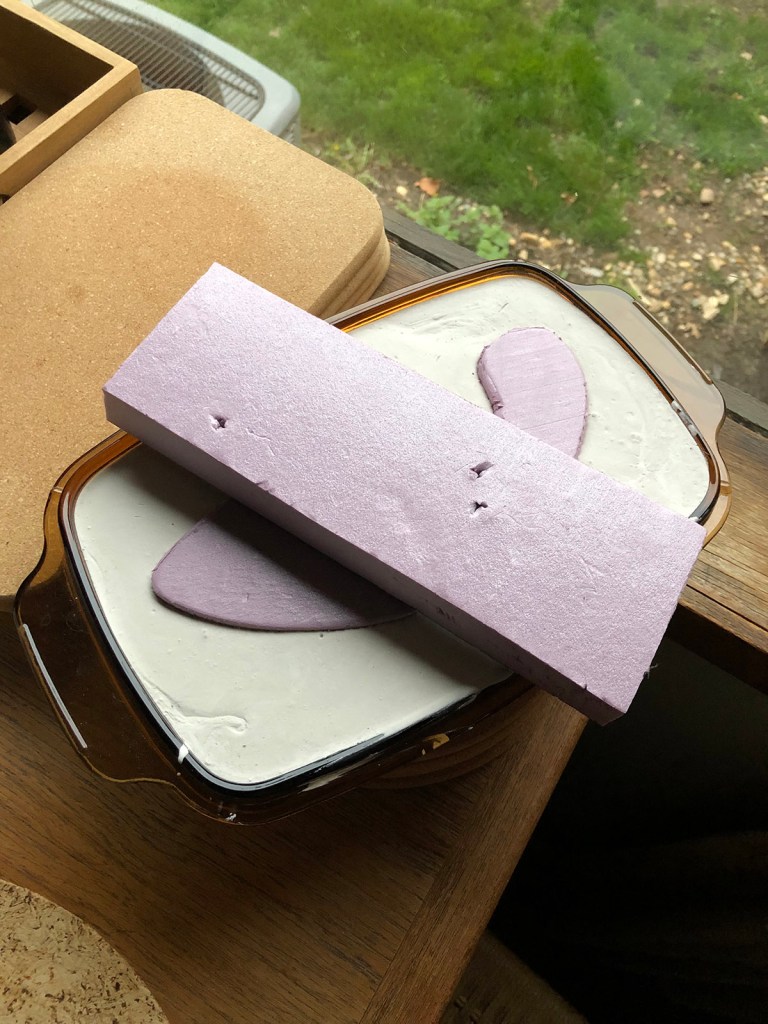
Since I would be casting a pair, I needed to get a reasonably consistent thickness for both casts, so I made sure the mold was level in each axis before casting. In order to keep the mold from cracking under the shock of molten lead, I pre-heated the plaster mold with the propane torch. Then is was just a simple matter of melting equal amounts of lead, pouring, waiting for them to cool, de-molding, and using a file to trim off any sharp edges or irregularities.
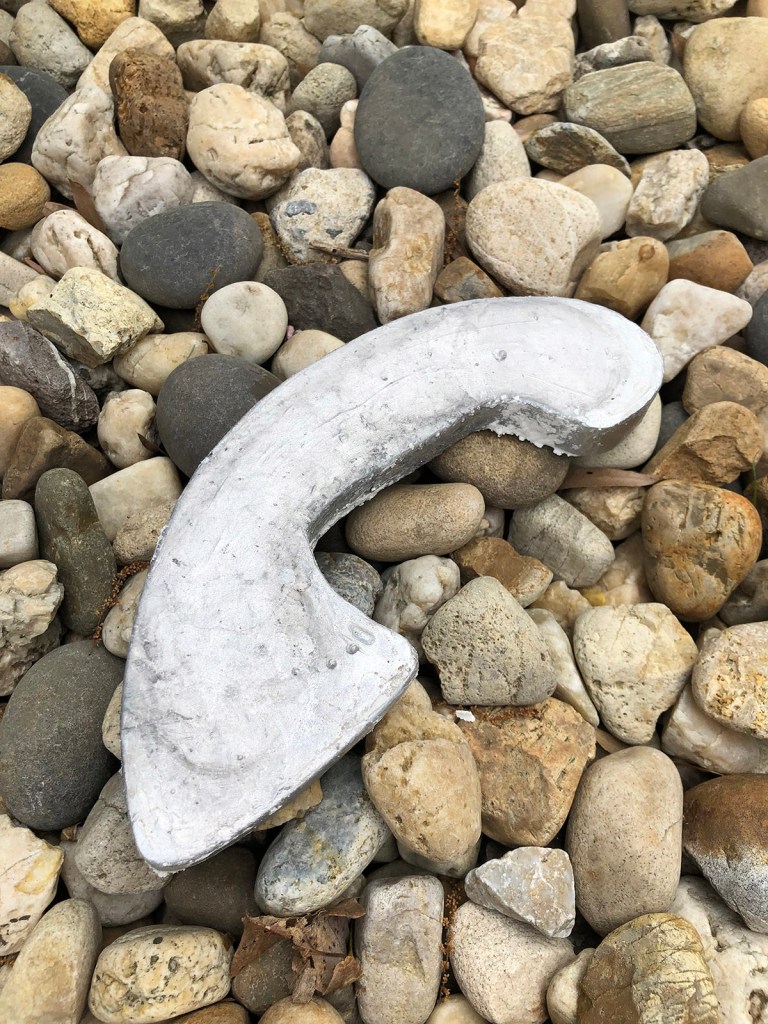
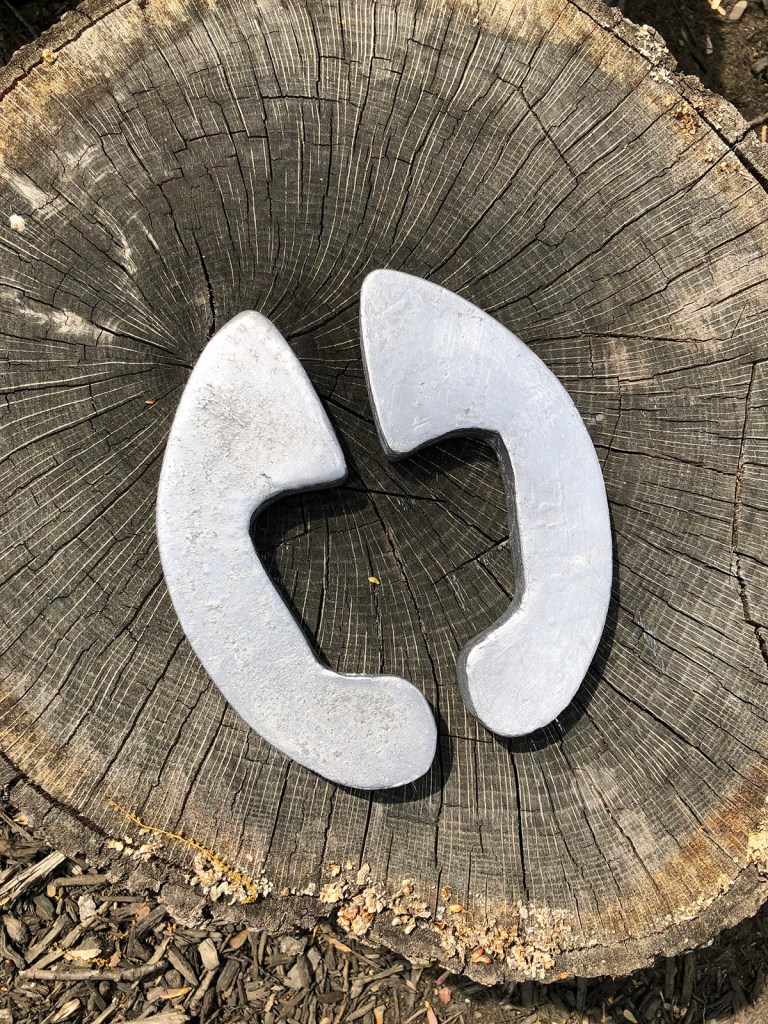
Since these weights would be handled quite a bit by our group, and will be available for the public to pick up during demonstrations, I sprayed 5 coats of clearcoat enamel on them. Once dry there’s no visual clue that they have any sort of coating, but will protect folks from lead contact. Since they aren’t handled very often, the risk of lead exposure is minimal anyway. But it took no effort to coat them, so I did.
It’s worth mentioning that during construction all lead sorting, melting, casting, shaping, etc. was done in a prepared space outdoors, with a fan blowing, face respirator, full face mask, leather gloves, with a full cleanup performed after on a controlled workspace to catch debris. Do not attempt without taking commonsense precautions. Lead-casting is really easy, but safety precautions are also really easy. Never skip on safety.
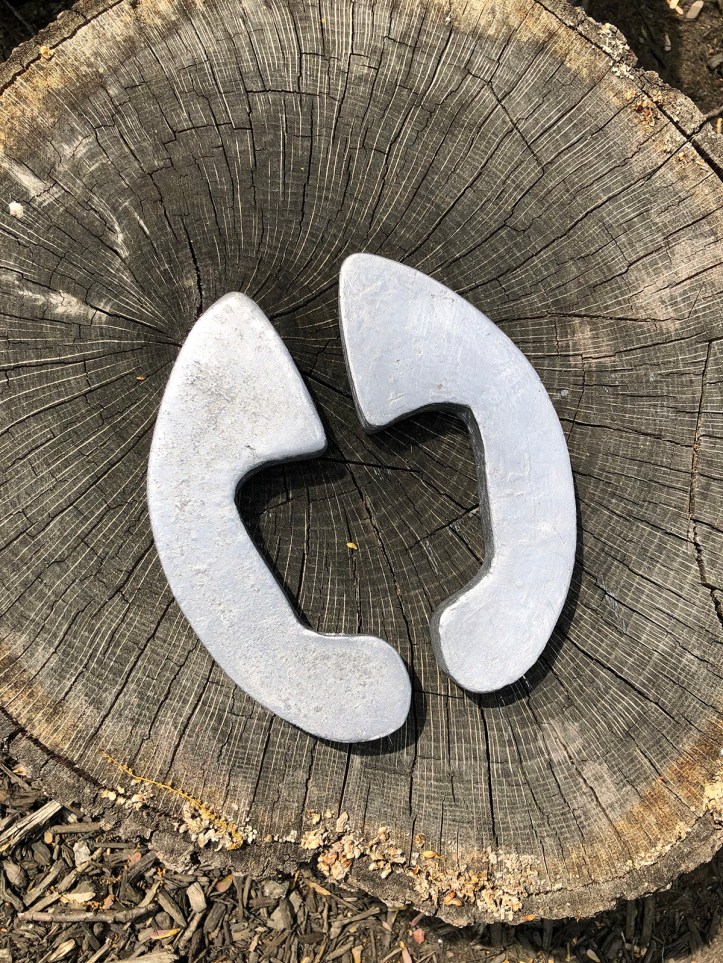
I’m pleased with the final result. My halteres weigh 5.1 pounds (2.1kg). Our jumping event was conducted as a standing broad jump. While there are theories about triple jumps, quintuple jumps, running jumps, etc. They are still speculative, so we limited ourselves to a broad jump to better measure our performance, and to be able to fit all of our events into an already full weekend. During our games, everyone unanimously agreed that the weights assisted in the jumps. But in all cases it took practice to get used to effectively using the weights while jumping. There are several reports online of universities performing scientific studies on the advantages of jumping weights. You can refer to those articles for more information.
I hope this post is of some use to those considering holding their own sporting events at reenactments, and making their own halteres.
 Giant Pygmy